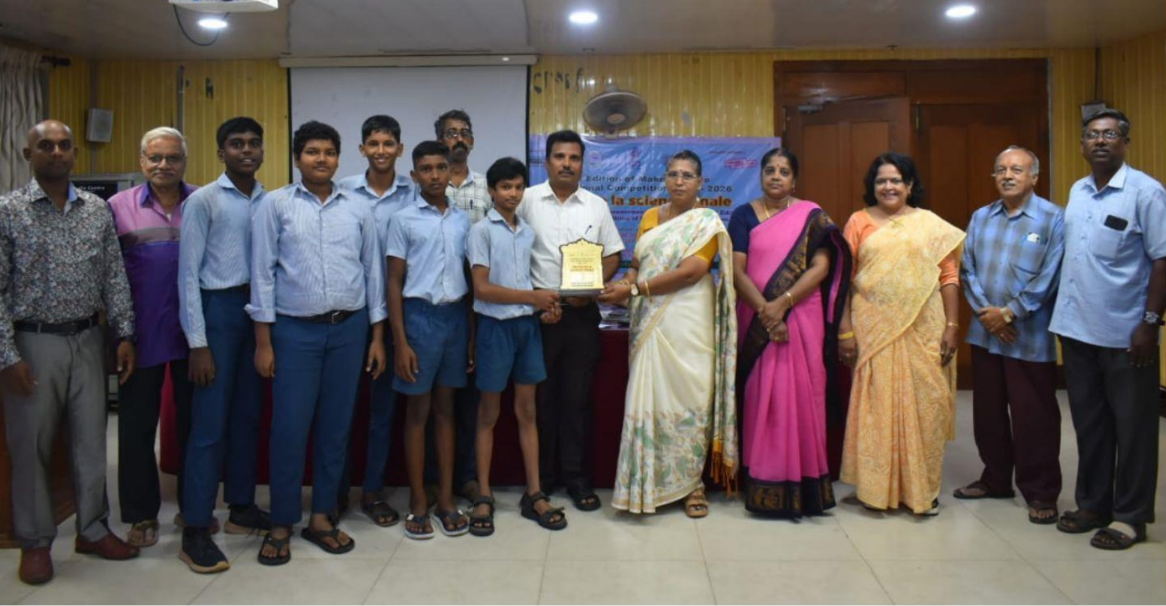
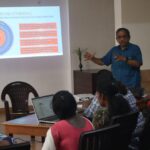
The Pondicherry Science Forum successfully organized its 20th Conference on January 24th, 2026. One of the resolutions adopted was a strong and timely call for transforming Puducherry into a Healthy City, rather than merely pursuing the concept of a Smart City. The conference brought together experts, public health advocates, and concerned citizens to deliberate on sustainable and people centered development. A key resolution was unanimously adopted, emphasizing that Puducherry must prioritize public health act, environmental protection, and equitable access to essential health services as the foundation of its development vision.
This resolution is given below:
Call for a “Healthy City Initiative in Puducherry”
Background
Globally, more people live in urban areas than in rural settings. While cities offer many opportunities for employment and access to better services (health, education, social protection) that are necessary for good health and human development, cities can also pose unique health risks.
In urban slums and smaller informal settlements with high levels of urban poverty and marginalisation go along with poor housing, overcrowding and lack of access to safe water and sanitation, and air pollution. These factors contribute to the spread of infectious diseases such as tuberculosis. Rates of noncommunicable diseases (NCDs), violence, and mental illness are also often higher because of the cities’ unhealthy social, built and food environments.
With such trends in mind, the World Health Organization (WHO) adopted a programme whose goal is “continually creating and improving those physical and social environments and expanding those community resources which enable people to mutually support each other in performing all the functions of life and developing to their maximum potential.” Under this scheme, cities are encouraged and supported to set in place a process to address the social determinants of ill health and health inequities, and when they do so effectively, they are awarded a healthy city certificate. Pondicherry is a tourist city. It is a smart city, It is a historic city.
Through this resolution, we in Pondicherry Science Forum and the Peoples Health Movement of Pondicherry appeal to the government and all residents in Puducherry to work together to also make Pondicherry a health city.
This work has to be undertaken by the municipalities headed by a mayor and municipal commissioner working together with public health institutes and the public, with the support of all the related departments of the government.
Puducherry- the health context:
Pondicherry was recently awarded recognition as one of the most attractive tourist sites in the world. With one one of the highest growth rates, and is also a health city,. In terms of health, though it has done well in reduction of infant and maternal mortality it faces huge challenges due to non-communicable diseases and mental illness and substance abuse. There are also many outbreaks of communicable disease. Over 30 percent of men and 23 percent of women have hypertension, over 20 percent of population over 15 years age have diabetes, the suicide rate at deaths per lakh population is the fourth highest in the world, deaths due to road traffic accidents is over 26.3 percent, obesity is over 40 percent, over 27% of men have an alcohol problem, anaemia in women is over 55 percent, and spousal violence is about 30 percent. And though there is so much obesity, there is also 20 percent of children are stunted due to under-nutrition. The population is rapidly aging, but there is no programme for elderly care.
Physical access to healthcare is relatively good. Puducherry has a well-developed health infrastructure, with over 3 government and 7 private medical colleges with close to 2000 seats. It also has 3 government and 11 nursing colleges with an output of over 930 nurses per year. There are more than 20 private hospitals. However the costs of care are prohibitive with over 90 percent experiencing high out of pocket expenditure and many being impoverished because of health care. In addition, in primary health care the government healthcare facilities include 39 Primary Health Centres, 77 Sub-Centres (now upgraded to HWCs), 4 Community Health Centres. But the care available is very selective. For most healthcare needs, patients have to go to the hospitals.
The poor status of health in Puducherry, is far more due to the poor social and environmental determinants of health. One major problem is sanitation and sewage, with open drains and poor waste disposal. Unsafe drinking water leads to frequent cholera outbreaks. Mosquitoes are another major problem. Road safety is poor and substance abuse high. NCDs relate to poor diets, lack of physical exercise, obesity and excessive use of tobacco and alcohol.
Environment and climate related changes are also rising- with frequent Flooding almost every year, increasing air pollution, increasing noise pollution and a highly vulnerable coastline.
Puducherry’s Healthy City Approach must aim to achieve the following:
- Access to safe water and food safety measures leading to elimination of water-borne and food borne disease
- Solid Waste management with segregation at source and adequate sewage systems
- Access to recreation space and walkable environments for everyone including the poor, elderly and people with disabilities.
- Road safety is ensured.
- Availability of nutritious and health food alternatives and measures against unhealthy foods.
- Every resident has good quality affordable housing and housing areas
- Air quality index and noise pollution within safety levels.
- Personal Safety and security challenges are addressed: Crime, harassment, and violence toward women and sexual and gender minorities are reduced.
- Disaster-proof against floods, cyclone and tsunami.
- Universal access to comprehensive primary health care
- Elimination of financial burden due to health care
- Social security and a functional ESI /ESI like system for all
Steps -
- Create a city health profile with baseline measurements on each of above parameters. Create indicators that should measure and monitor health outcomes across population groups and areas.
- Apply to World Health Organisation to join the Healthy City Programme.
- Increase health awareness in the city – Disseminate a core healthy city message that is more profound than promoting individual health. Show how healthy lifestyles are fundamentally shaped by the social, physical and economic environments of a city and improved by councils and communities acting together
- Review, strengthen and implement Puducherry’s Public Health Law and measures to ensure free or subsidised healthcare as a basic right.
- Producing a city health development plan -contains the city’s vision and values and a strategy for achievement. Its political purpose is to demonstrate that health is a core value of the city administration.
- Ensuring intersectoral collaboration – establishing common goals, contributions from various sectors with shared responsibilities and strong central leadership
- Enhancing community participation –Support forums focused on specific topics such as urban planning, housing, transport, health and social services. Encourage citizens to participate actively in developing the city health development plan
Puducherry Science Forum and Pondicherry Health Movements calls on government and civil society organisation to adopt a plan based on the above principles to achieve and declare Puducherry as a Healthy City.
References :
- Healthy cities. World Health Organisation
- How to develop and sustain healthy cities in 20 steps. Copenhagen: WHO Regional Office for Europe; 2022